


-
Ancestry
- Deep Ancestry
- Global Ancestry
- Ancient Bloodlines
- Native American
- Y-DNA
- mtDNA
- European
- Asian
- African
- UK
- Viking
- Hunter vs Farmer
- Ancient Ancestry
- Ancient European
- Celtic
- British
- Italian
- Iberian
- Greek
- Ancient Northern European
- Neanderthal
-
Wellness & Health
- Nutrition Advice
- Fitness Advice
- Skincare
- Mental Wellbeing
- Organ Wellness
- Joint/Blood
-
Fun
- Personality
- Political


-
Food & Nutrition
- Nutrigenomics
- Folate
- Gluten Sensitivity
- Vitamin B2
- Vitamin D
- Vitamin E
-
Personality
- Personality Genetics
- Empathy
- Instant Gratification
- Loneliness
- Risk-taking
- Romantic Relationship
-
Physical Traits
- Breast Size
- Cellulite
- Dog Allergy
- Facial Attractiveness
- Tanning
- Time To Sleep
-
Sports
- Athletic Ability
- Muscular Strength
- Pulmonary Function
- Sprint Performance
- VO2 Max and Training
- Walking Pace
-
Intelligence
- Brain Arousal
- Cognitive Ability
- Educational Attainment
- Mathematical Ability
- Multitasking
- Musical Ability


-
Articles
- Best DNA Upload SItes
- Best DNA Testing
- Native American DNA Testing
- Free Ancestry DNA Testing
- Indigenous America’s Ancestry DNA
- MyTrueAncestry Review
- Free Options for DNA Testing
- Viking DNA Testing
- How to Use GEDmatch
- How to Spot a Fake DNA Test
- Best Free DNA Testing Options Online
- AncestryDNA vs MyHeritage: Expert Review & Comparison
- 5 Things You Should Known Before Using DNA Painter
- Alternatives to Promethease
- Is Aspergers Genetic?
- How Accurate is 23andMe?
- How to Read Raw DNA Data
- How Long Does AncestryDNA Take?
- Best Nutrition DNA Tests to Understand Your Health
- Is DNA Testing for Food Sensitivity Accurate?
- 6 Things You Should Know Before Buying 'MyHeritage
Y-DNA Paternal-Line Report
Discover your hidden Y DNA insights
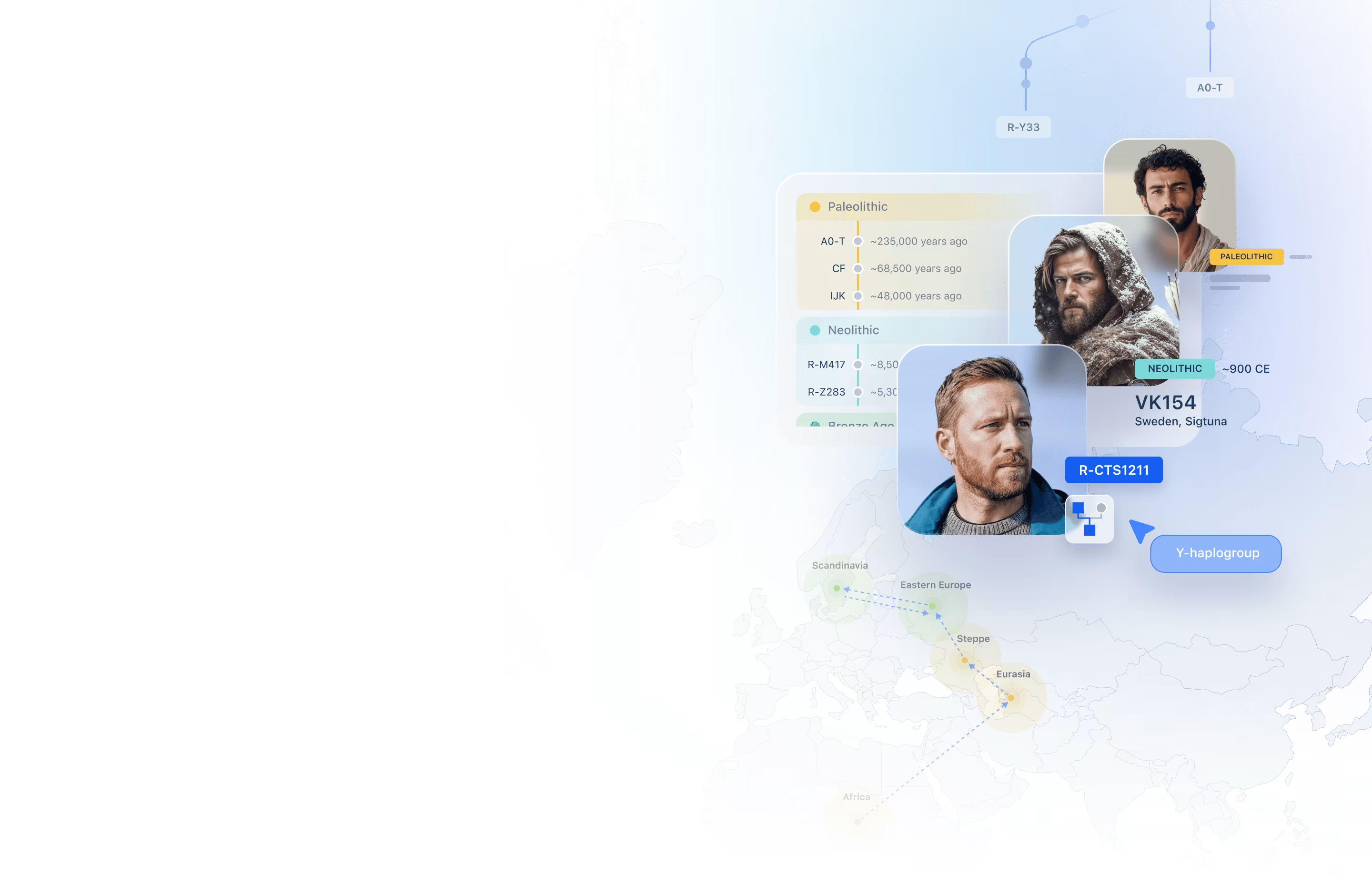
Your Y-chromosome carries an unbroken father-to-son signal stretching back over 235,000 years. The tiny marker changes accumulated along the way are exactly what lets us trace your line.
We read it from your existing DNA file from Ancestry, 23andMe, or MyHeritage, trace it back through every branching point in the human Y-tree, and show you the ancient men who share your line.
Y-DNA Paternal-Line Report
Discover your hidden Y DNA insights
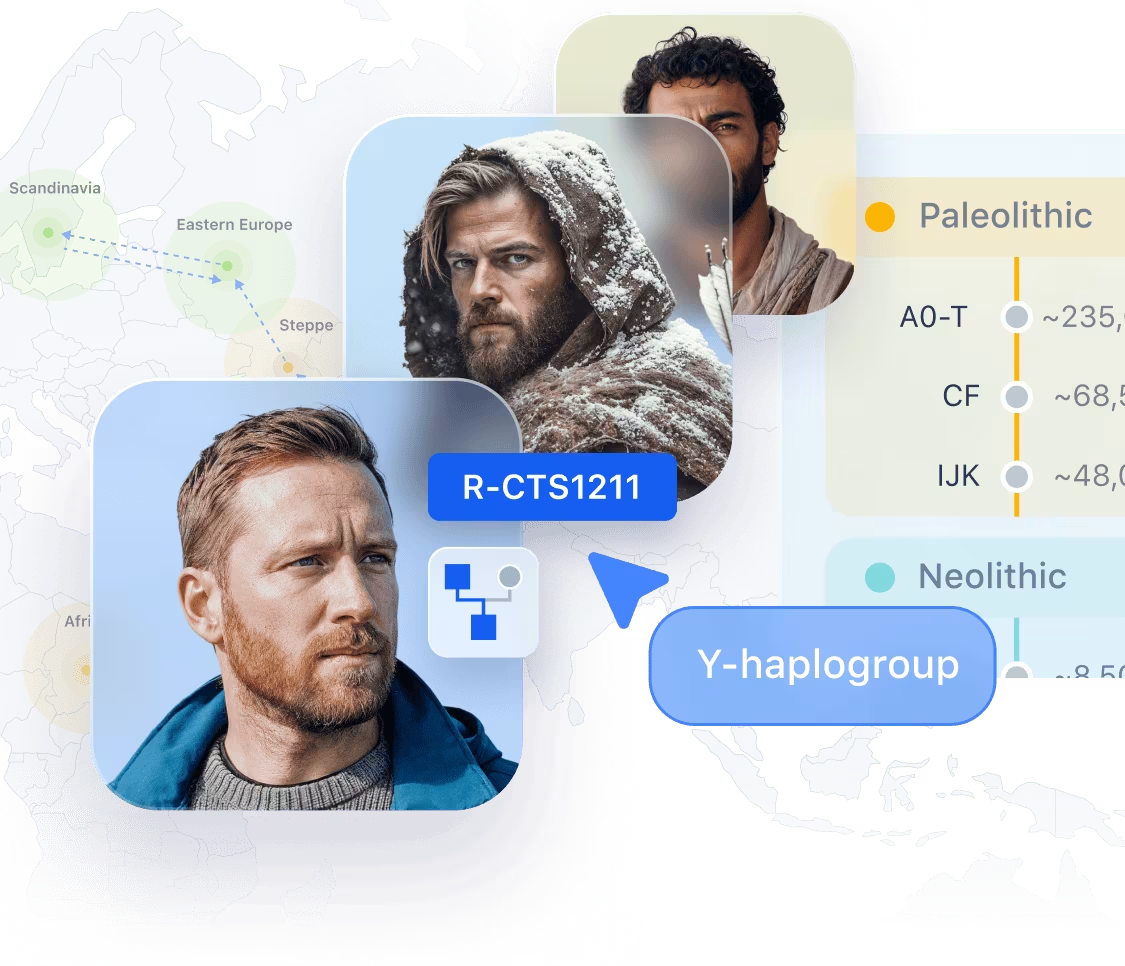
Your Y-chromosome carries an unbroken father-to-son signal stretching back over 235,000 years. The tiny marker changes accumulated along the way are exactly what lets us trace your line.
We read it from your existing DNA file from Ancestry, 23andMe, or MyHeritage, trace it back through every branching point in the human Y-tree, and show you the ancient men who share your line.
What is Y-DNA?

Passed unchanged, father to son
Autosomal DNA halves every generation. Y-DNA doesn't — it passes father to son almost untouched, carrying an unbroken signal across hundreds of generations.

Anchored in deep time
Tiny marker changes accumulate over millennia, letting scientists date each branch — some 50,000+ years back — and map the entire human paternal family tree.
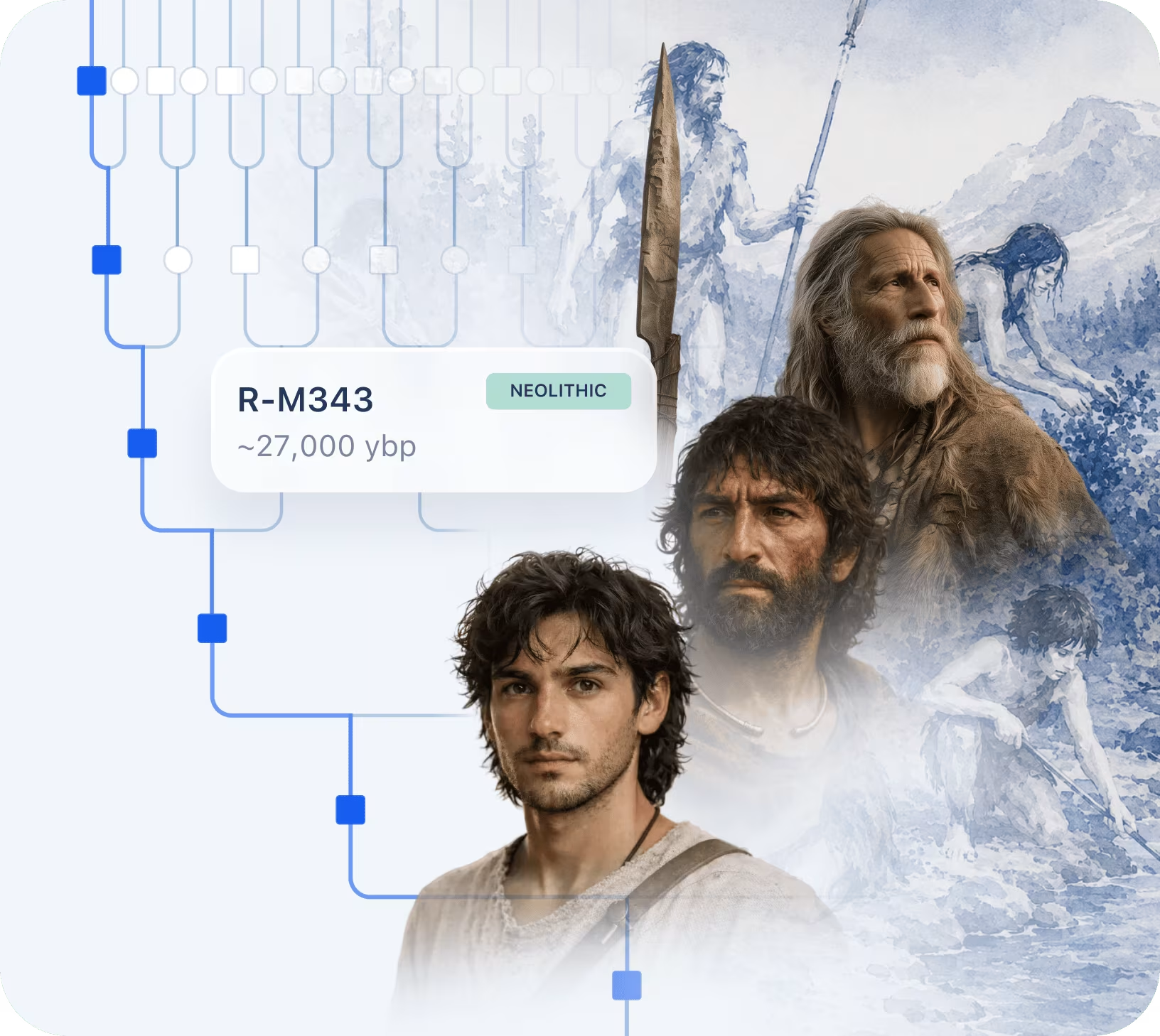

Your haplogroup on the world stage
Every branch maps to a region and era. Yours tells you where your paternal ancestors were thousands of years ago — confirmed by ancient DNA from real archaeological finds.

Works with your existing test
We read the Y-SNPs already in your file. AncestryDNA, 23andMe, MyHeritage — all work. No new kit, no extra cost.
Want to go deeper?
Add another DNA file after purchase and we’ll run a separate analysis on it, so you can see how much deeper it reaches than your chip file.
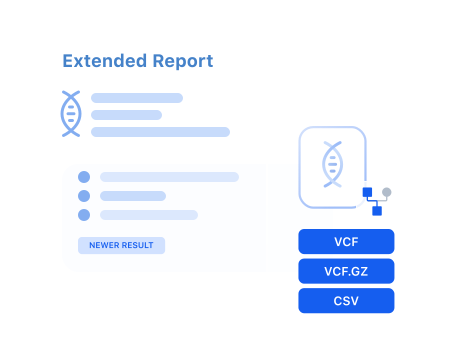
Supported files: VCF, VCF.GZ, CSV, or TXT from
-

Whole Genome (WGS)
-
Y-DNA NGS panels
-
Big Y / high-coverage Y-DNA
-
Targeted Y-chromosome tests
Four ways your paternal story shows up
Every section is real data from your file or from peer-reviewed research.
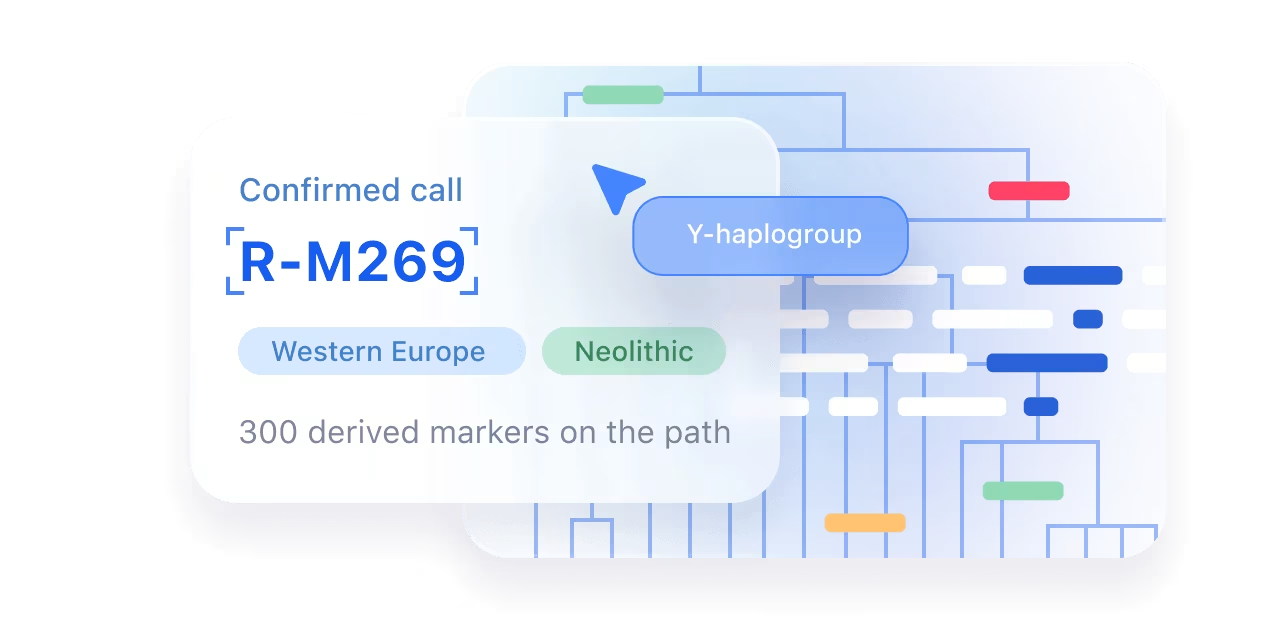
Your terminal call
The deepest branch of the Y-tree your DNA reaches
Your headline call shows two depths together: the haplogroup we're confident in and a deeper provisional branch the data hints at. You always see both the depth we vouch for and the depth we're suggesting — no surprises, no second-guessing.
Full lineage timeline
Every branching point, anchored on a log-scale time axis
Up to 36 branches from the root in Africa down to your branch. Era bands (Paleolithic through Iron Age & later) anchor each one in its archaeological period, and the table below lists every branch with the age it first formed.

Ancient relatives
Real published specimens on a world map
The report helps translate labels like R1b, R-M269, R1b1a1a2, or deeper SNP codes, so users can understand whether two names point to the same branch, a parent branch, or a downstream subclade.

How far we can see
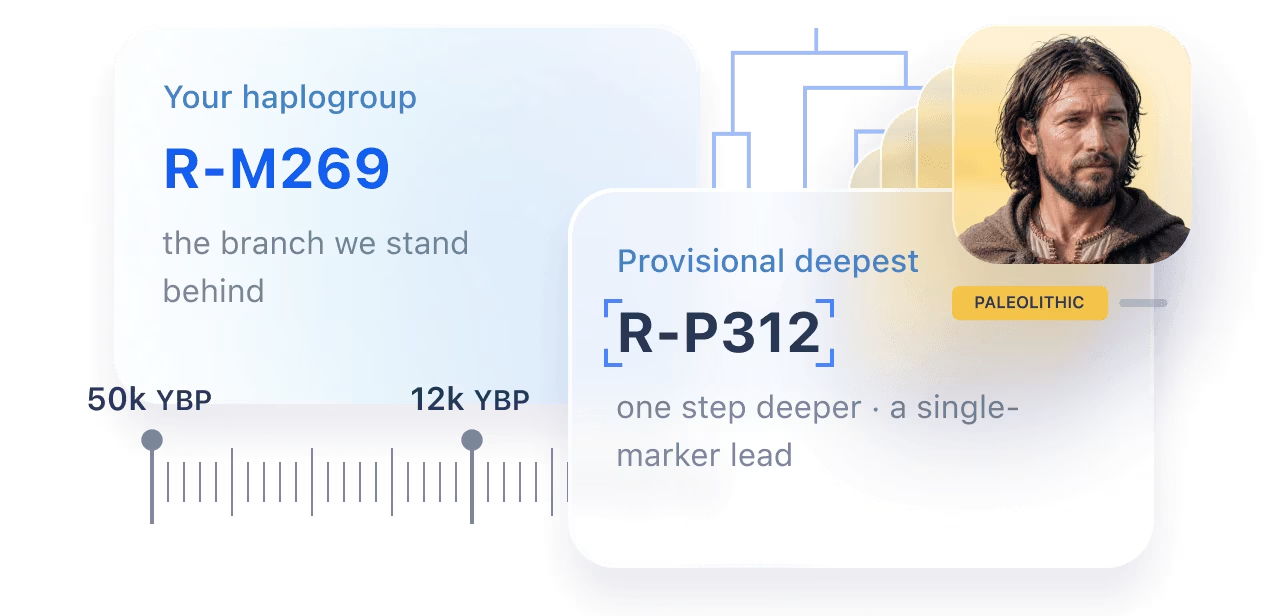
Two depths, shown side by side
We don't hide behind a single answer. You get the deepest branch we can stand behind and a provisional branch one step further — the lead we're suggesting but can't yet confirm. That's how you avoid the “my other test says something different” confusion.
How it works
Over a million users have joined Genomelink with DNA tests ranging from genotyping to Y-DNA/mtDNA and Whole Genome Sequencing — so we know exactly where to uncover your hidden Y-DNA insights.

Step 1
We check your DNA file
Y-DNA isn't in every test file. We scan the genome you've already uploaded to see if there are enough Y-chromosome markers to make a confident call. Takes a few seconds.

Step 2
You see a free preview
If we can call your haplogroup, you get a free preview: your terminal call, a deeper provisional branch the data hints at, and the headline counts. No payment yet.

Step 3
Unlock the full report
One-time purchase. You get the complete era-banded lineage path, every ancient relative on an interactive world map, science-based story of your branch, and a downloadable PDF (coming soon).
A few honest caveats

Chip resolution caps how deep we can go
Modern 23andMe v5 files cover the Y-chromosome well. AncestryDNA and MyHeritage stopped reporting Y-DNA in early 2026, and some older tests cover the Y poorly — so not every file can be called. Our free preview tells you immediately whether yours can, before any payment.

We don't do living-relative matching
This report identifies your terminal Y-haplogroup and your ancient-DNA relatives. We don't maintain a database of living testers, so we won't connect you with paternal-line cousins. For that you'll want FTDNA's Big Y product.

Y-DNA is paternal-only
Father to son, almost untouched, with just enough tiny mutations to map your lineage. Daughters don't inherit Y-DNA at all — but you can still get this report by uploading a male relative's file.

Your DNA never leaves Genomelink
Analysis runs on data already in your account. We don't share your raw genome or your haplogroup result with third parties.
FAQ
What's a Y-haplogroup, exactly?
A Y-haplogroup is a branch of the human paternal-line family tree, defined by a shared set of tiny inherited marker changes on the Y-chromosome. Every man alive descends from a single Y-chromosome ancestor who lived in Africa about 235,000 years ago, and the tree has branched thousands of times since. Your terminal haplogroup is the deepest, most specific branch we can place you on — like R-M269 (Western European), I1 (Nordic), or N-Z4762 (Northern Eurasian/Uralic).
How is this different from FTDNA Big Y?
FTDNA Big Y is a separate test — they sequence your Y-chromosome directly at very high coverage, and they maintain a database of living testers so you can find paternal cousins. Our report works from the DNA file you've already uploaded (no new test, no extra cost), reads only the Y-SNPs your existing chip covers (typically a few thousand), and matches you to ancient published specimens — not living relatives. If you want a deeper call or living-cousin matching, Big Y is the upgrade path.
Why didn't my previous DNA tests report this?
Every DNA company has its own product focus. FamilyTreeDNA is the recognized specialist in Y-DNA testing, while AncestryDNA, 23andMe, and MyHeritage focus their analysis on autosomal DNA — ethnicity estimates and living-relative matching. Genomelink's focus is different again: we specialize in surfacing additional ancestry and trait insights from DNA data you've already tested elsewhere, using our own proprietary algorithm and dataset. This report is one of those additional insights — not something your original testing company chose to report.
Do I need to take a new DNA test?
No — we read the Y-SNPs directly from a 23andMe v4 or v5 raw file (we also accept a GRCh37 VCF), so there's no new test to take. AncestryDNA and MyHeritage discontinued Y-DNA in early 2026, so those exports can't be used for a Y-call; support for more file formats is on our roadmap. Click join now and we'll tell you within seconds whether your file has the Y-chromosome coverage needed.
What if my file doesn't have enough Y-SNPs?
We'll tell you. The free preview includes an eligibility check — if your file falls below the coverage floor for a confident call (typically <1,000 usable Y-SNPs), you won't be charged and we'll suggest a higher-coverage upgrade test as a partner referral. The most common cause is an older AncestryDNA chip that doesn't cover the Y well, or a female sample with no Y-DNA at all.
How accurate is the call?
We only place you on a branch your markers actually support. The free preview runs an eligibility check first — if your file doesn't have enough usable Y-SNPs for a dependable call, we tell you and you're not charged. For files that pass, we show two depths side by side: the branch we can stand behind, and a provisional branch one step deeper that your markers hint at but can't yet confirm. You always see both the depth we vouch for and the depth we're suggesting — so there's no “my other test says something different” surprise.
Will I find living relatives in this report?
No — and we want to be upfront about it. Living-relative matching requires a database of other tested customers, which we don't maintain. The "relatives" in this report are ancient: people from archaeological sites whose remains have been sequenced and published in peer-reviewed research. They're your distant paternal cousins from deep history, not contacts to message.
How often is the report updated?
We refresh our dataset as new ancient-DNA research and public Y-tree data become available. Paid customers receive updated reports automatically when relevant database updates are released, at no extra cost.
Where does the data come from?
The report is built from open-access scientific datasets, public Y-chromosome tree resources, and academic ancient-DNA literature. Full reports include a Sources section showing where the key data points and figures came from.
