

-
Ancestry
- Deep Ancestry
- Global Ancestry
- Ancient Bloodlines
- Native American
- Y-DNA
- mtDNA
- European
- Asian
- African
- UK
- Viking
- Hunter vs Farmer
- Ancient Ancestry
- Ancient European
- Celtic
- British
- Italian
- Iberian
- Greek
- Ancient Northern European
- Neanderthal
-
Wellness & Health
- Nutrition Advice
- Fitness Advice
- Skincare
- Mental Wellbeing
- Organ Wellness
- Joint/Blood
-
Fun
- Personality
- Political


-
Food & Nutrition
- Nutrigenomics
- Folate
- Gluten Sensitivity
- Vitamin B2
- Vitamin D
- Vitamin E
-
Personality
- Personality Genetics
- Empathy
- Instant Gratification
- Loneliness
- Risk-taking
- Romantic Relationship
-
Physical Traits
- Breast Size
- Cellulite
- Dog Allergy
- Facial Attractiveness
- Tanning
- Time To Sleep
-
Sports
- Athletic Ability
- Muscular Strength
- Pulmonary Function
- Sprint Performance
- VO2 Max and Training
- Walking Pace
-
Intelligence
- Brain Arousal
- Cognitive Ability
- Educational Attainment
- Mathematical Ability
- Multitasking
- Musical Ability
-
Articles
- Best DNA Upload SItes
- Best DNA Testing
- Native American DNA Testing
- Free Ancestry DNA Testing
- Indigenous America’s Ancestry DNA
- MyTrueAncestry Review
- Free Options for DNA Testing
- Viking DNA Testing
- FamilyTreeDNA Review
- How to Use GEDmatch
- How to Spot a Fake DNA Test
- Best Free DNA Testing Options Online
- AncestryDNA vs MyHeritage: Expert Review & Comparison
- 5 Things You Should Known Before Using DNA Painter
- Alternatives to Promethease
- Is Aspergers Genetic?
- How Accurate is 23andMe?
- How to Read Raw DNA Data
- How Long Does AncestryDNA Take?
- Best Nutrition DNA Tests to Understand Your Health
- Is DNA Testing for Food Sensitivity Accurate?
- 6 Things You Should Know Before Buying 'MyHeritage
Chromosome Breakdown
Uncover and celebrate your European heritage
Reveal European ancestry in greater detail — beyond standard ethnicity estimates.

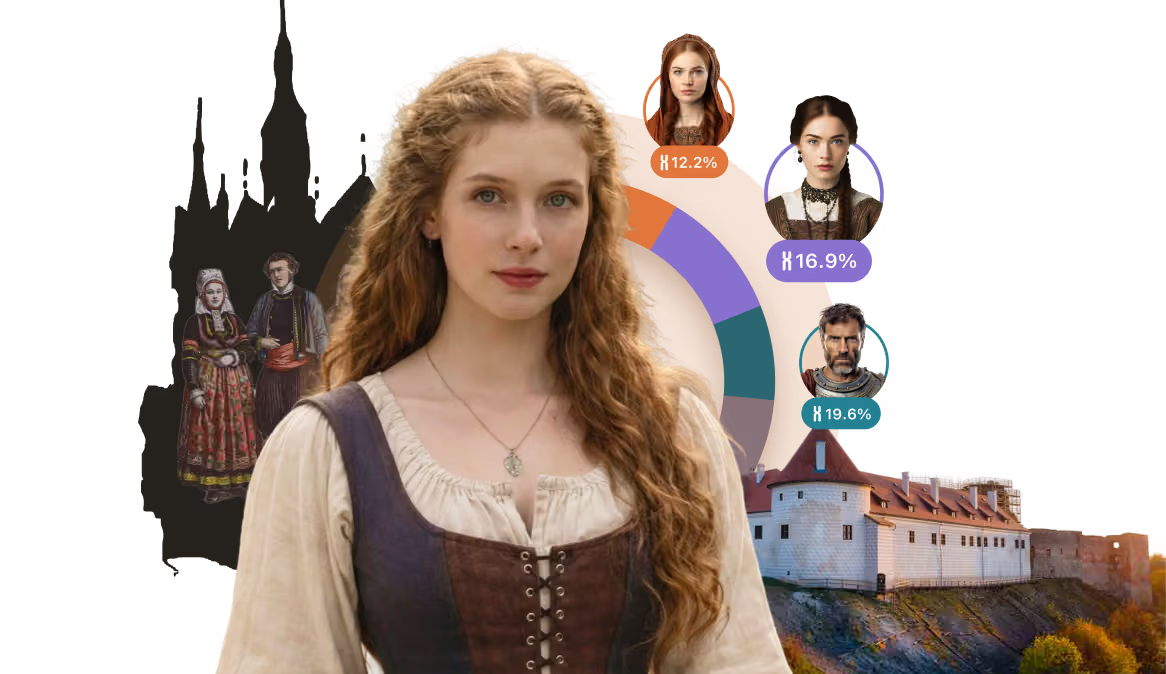
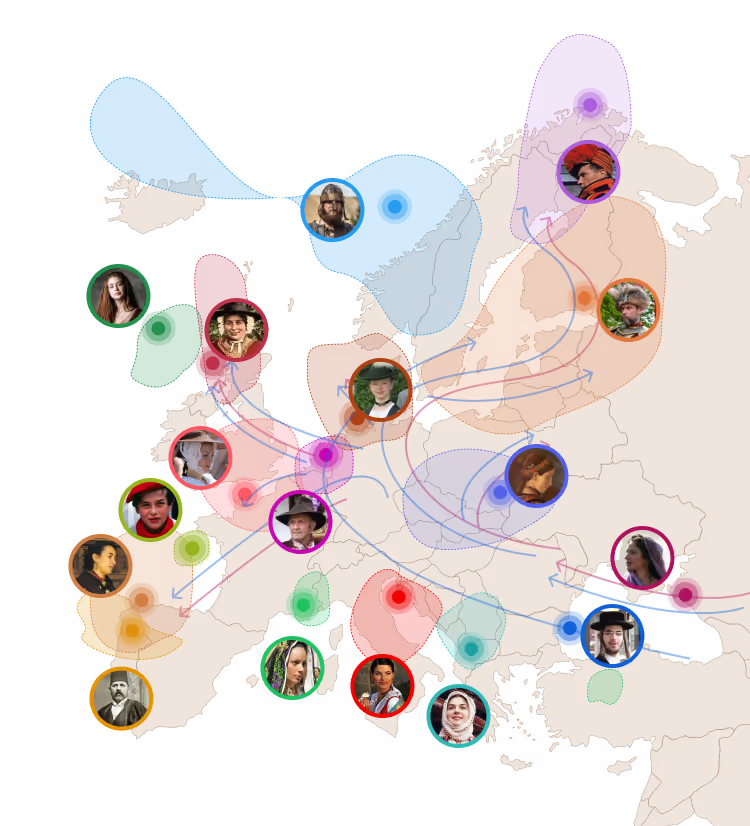
17 European regional breakdowns — more detail than ever
Explore your ancestry across 17 distinct European regions, offering deeper resolution than broad “European” labels and helping you better understand where your roots truly lie.
-
lberian
-
British
-
French
-
German
-
Irish
-
Southern Italy
-
Central European Jewish
-
South Slavic
-
South Balkan
-
Northern Europe
-
Eastern Europe
-
Basque
-
Scandinavian
-
Hispanic Jews
-
Mediterranean Islander
-
Tirolean Alpine
-
Roma

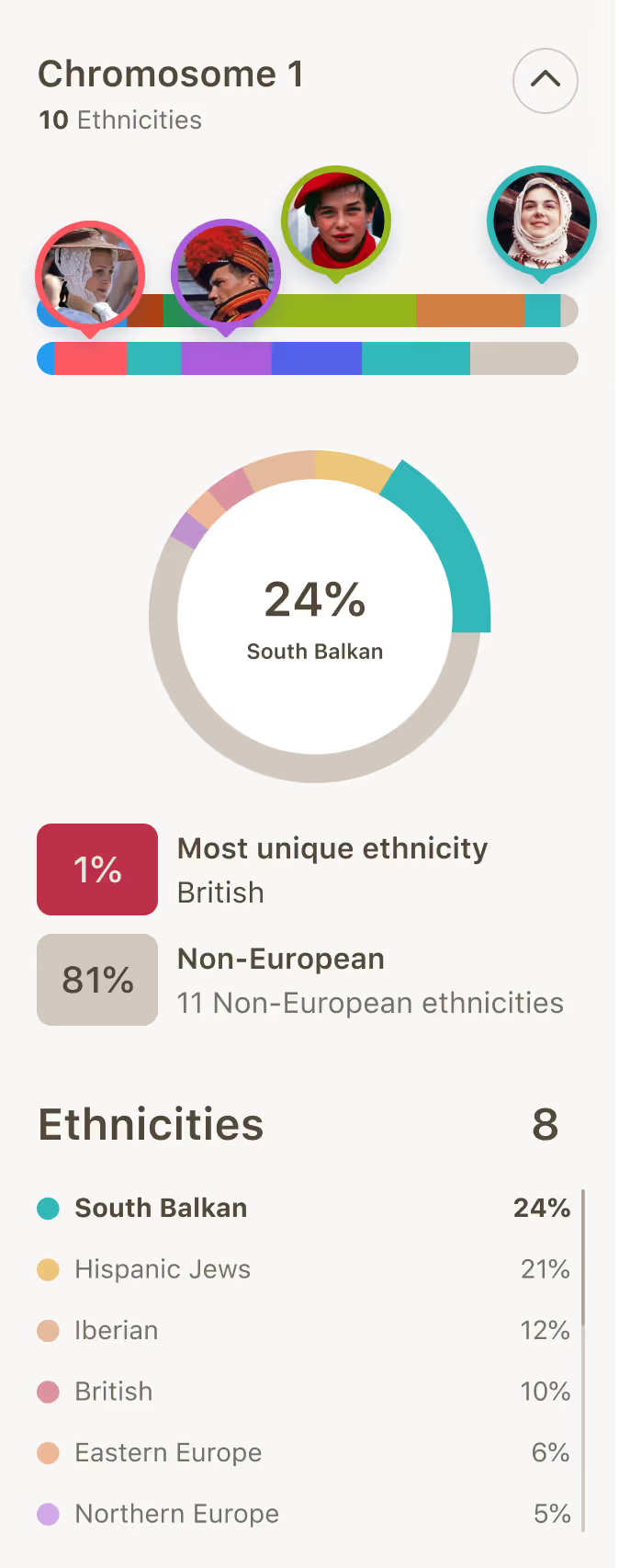
Chromosome breakdown — deep analysis you won’t find elsewhere
Our proprietary 22-chromosome analysis reveals ancestry signals that standard tests often miss, providing a clearer picture of how your ancestry was inherited.

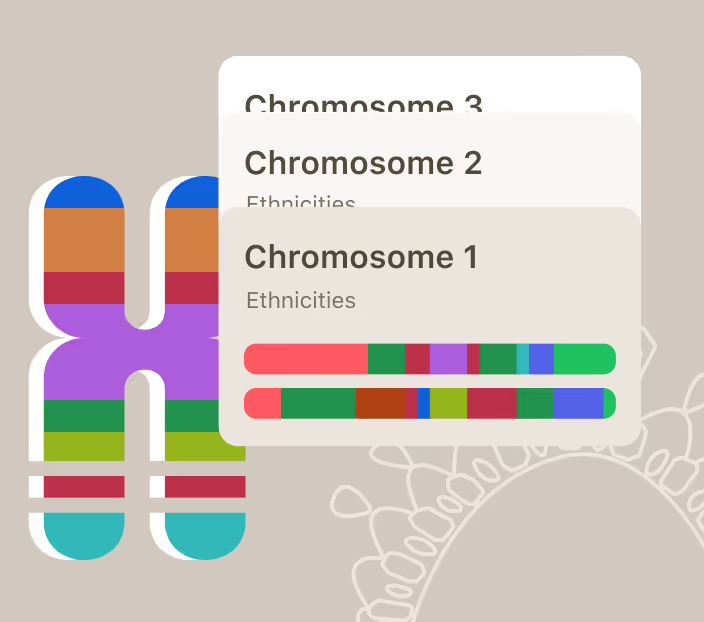
Each of your chromosomes carries a unique part of your ancestry story.
As DNA is passed down through generations, chromosomes are reshuffled through a random process called recombination. Over time, this creates meaningful differences in which ancestral
segments are inherited — even between siblings.
That’s why examining DNA at the chromosome level is essential for detecting ancestry that can be diluted or missed in broader
analyses.
A more sensitive way to detect European ancestry
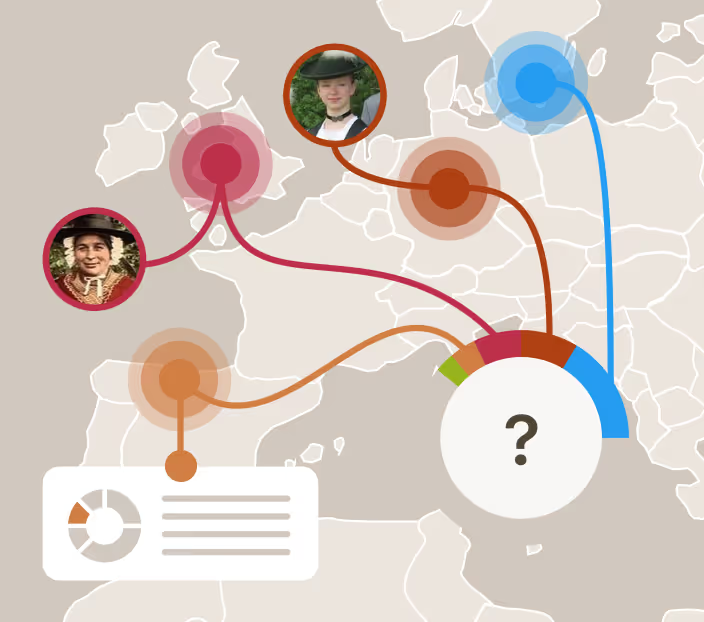
Understand your European ancestry
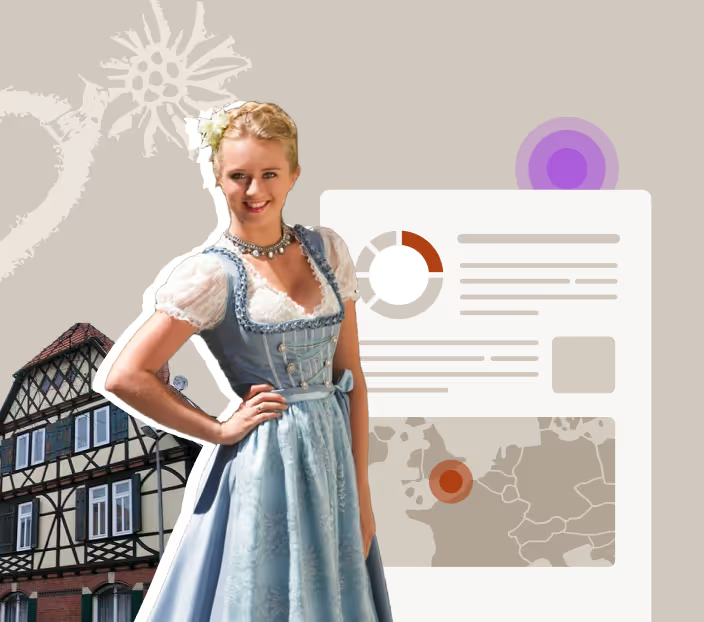
Learn more about the regions behind your DNA
Designed with population genetics experts

Carlos D. Bustamante
Dr. Carlos D. Bustamante is an internationally recognized leader in the application of data science and genomics technology to problems in medicine, agriculture, and biology. He was named a MacArthur Fellow in 2010, and currently Professor of Biomedical Data Science, Genetics at Stanford University.

Alexander Ioanidis
Dr. Alexander Ioannidis (PhD, MPhil) is a research fellow in the Stanford School of Medicine (Department of Biomedical Data Science), his work focuses on applying computational methods to problems in genomics and population genetics.

Razib Khan
Razib Khan has degrees in biology and biochemistry from the University of Oregon. He studied genetics at the graduate level at UC Davis. He helped develop ancestry algorithms for Family Tree DNA and National Geographic. He has worked in the personal genomics industry for 8 years.

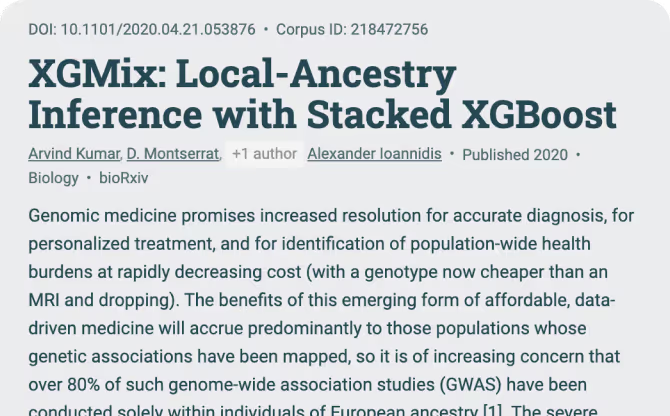
The authors present a new simple, accurate, and easily trained methods for identifying and annotating ancestry along the genome (local ancestry). This method (XGMix) based on gradient boosted trees, which, while being accurate, is also simple to use, and fast to train, taking minutes on consumer-level laptops.
Scientific paper PDF"The European Breakdown gave me more detail than any other ancestry test."
By examining all 22 chromosomes individually, the European Breakdown uncovers subtle regional European ancestry and maps it to 17 distinct European regions, supported by population genetics research.